
Search Delaware Booking Releases
Delaware Booking Releases are the records that track when someone is booked into custody and when they are released. In Delaware, these records are held by the state Department of Correction, not by county jails. That means you can search Delaware Booking Releases for the whole state from one place. Most people start by looking up an inmate by name to get their current custody status. Booking Releases records also come from local police, state troopers, and the courts when cases move through the system. This page shows you where to search and how to get a copy.
Delaware Booking Releases Overview
Delaware Department of Correction and Booking Releases
The Delaware Department of Correction runs every adult jail and prison in the state. There are no county jails here. That makes Delaware rare in the United States. Because the system is unified, Delaware Booking Releases for adults flow through one agency. The DOC has over 2,500 staff and is the largest law enforcement body in the state. It is split into several bureaus. The Bureau of Prisons, the Bureau of Community Corrections, and the Bureau of Correctional Healthcare Services each play a role in the booking and release cycle.
You can start most searches at the Delaware Department of Correction homepage, which lists each facility, staff contacts, and links to the inmate locator. The DOC handles pre-trial holds, sentenced offenders, and people who have broken parole or probation rules. All of these custody events end up in the central records file.
The Delaware DOC website is the main hub for state-level custody information, and the image below shows the homepage layout used by the public and inmate families.
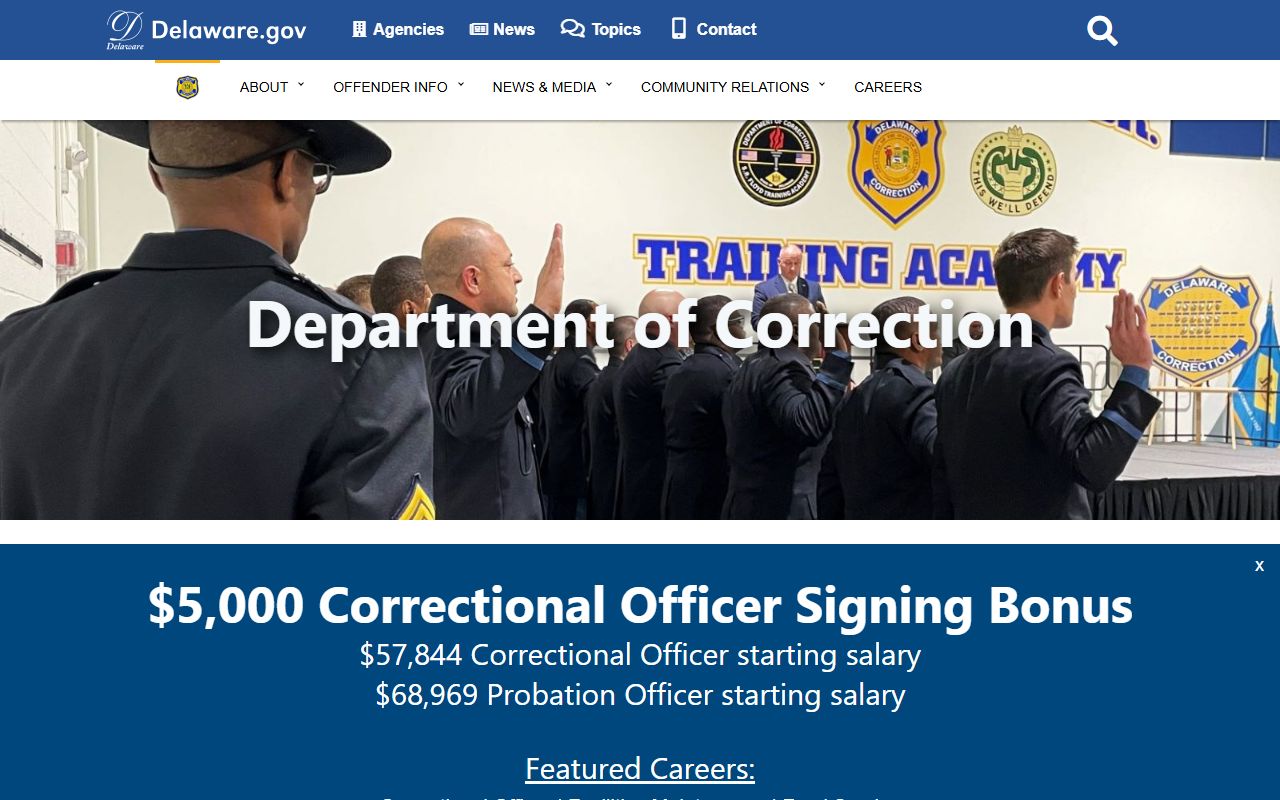
From there you can reach the inmate locator, FOIA forms, and links to each Level V and Level IV site. The DOC page is the best first stop when you are new to looking up Delaware Booking Releases.
How to Search Delaware Booking Releases Online
The fastest way to look up Delaware Booking Releases is the state inmate locator. This tool uses the VINELink system. VINELink is the web version of VINE, the National Victim Notification Network. You can use it to find out if a person is in custody, where they are held, and what their status is. The locator is free. You do not need to sign up to run a basic name search. To get alerts when custody changes, you can sign up for texts, calls, or emails through the same site.
To search, you need the person's first and last name. A date of birth helps narrow the list when the name is common. The tool returns basic info only. It shows the facility, the custody status, and the expected release date if one has been set. For the full file, you still need to send a FOIA request.
A short list of things the locator shows:
- Current facility holding the inmate
- Custody status, such as sentenced or pre-trial
- Expected release date when set by the court
- Notification sign-up options for status changes
Before you run a search, keep in mind that release dates can shift. Good time credits, new charges, or holds from other states can change a date. The DOC can also hold someone past the listed date if a detainer is in place. Use the Delaware DOC Inmate Locator for the most current status.
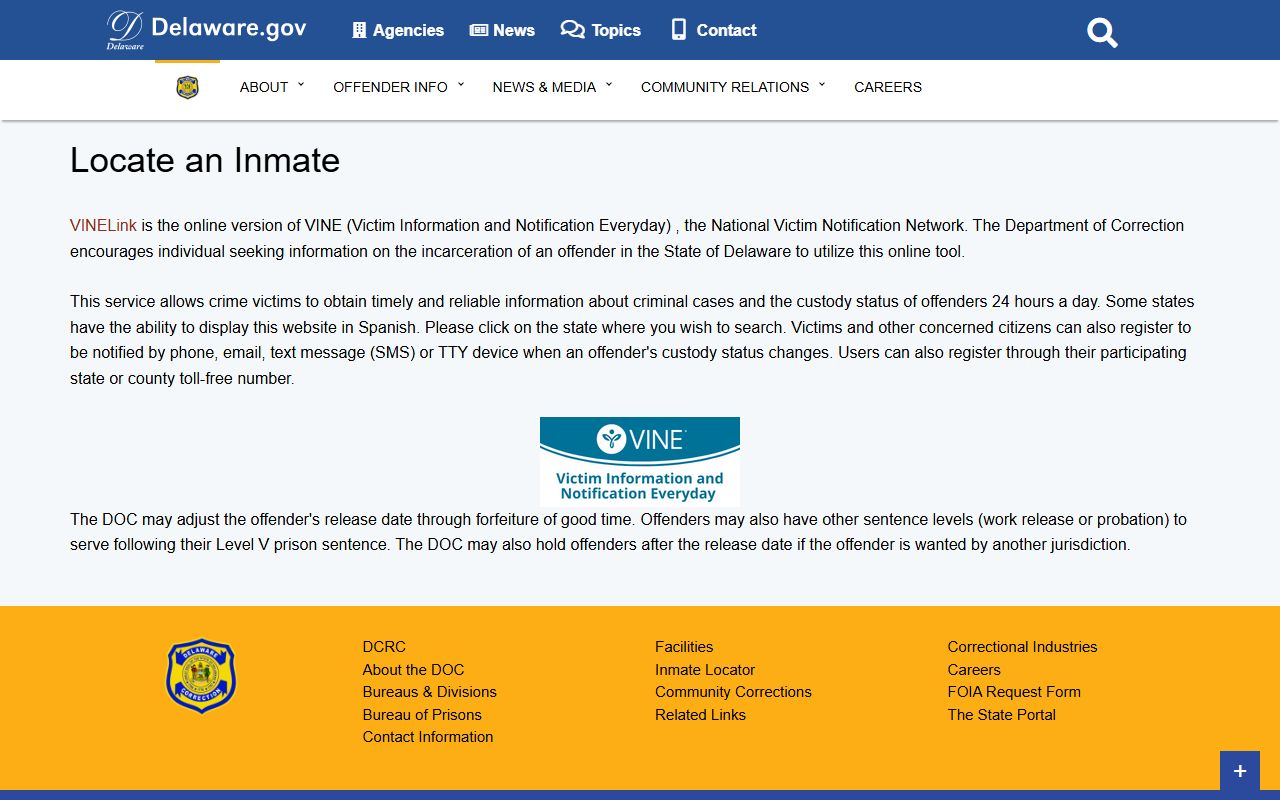
The locator screen lets you search by name and returns custody status for anyone in DOC care. It is the core tool for state Booking Releases searches.
Note: The state locator shows basic custody data only; detailed case files still require a written FOIA request sent to the agency that holds the record.
Delaware Booking Releases Process Overview
The Central Offender Records Unit is the part of the DOC that keeps the legal file for each person in custody. The unit is led by Toby Davis and splits work into two sections. The Active Section holds files for inmates who are still in custody. The Inactive Section handles files after release. Together they track every step of the Delaware Booking Releases cycle. That starts at intake and ends with discharge or transfer to probation.
The Active Section tasks include intake on arrival, sentence math when the court hands down a term, moving inmates between SENTAC levels, and final release to parole or the street. The unit also runs the interstate detainer process. It schedules court trips, books people held for other states, and sends victim alert letters. DNA testing, sex offender sign-ups, and good time credits all pass through this unit. The Inactive Section handles subpoenas for old files, archive and destroy tasks, and records for attorneys and past clients. It also reviews the daily release roster.
You can read more at the Central Offender Records Unit page, which lists the tasks each section handles and points you to the right contact for your request.
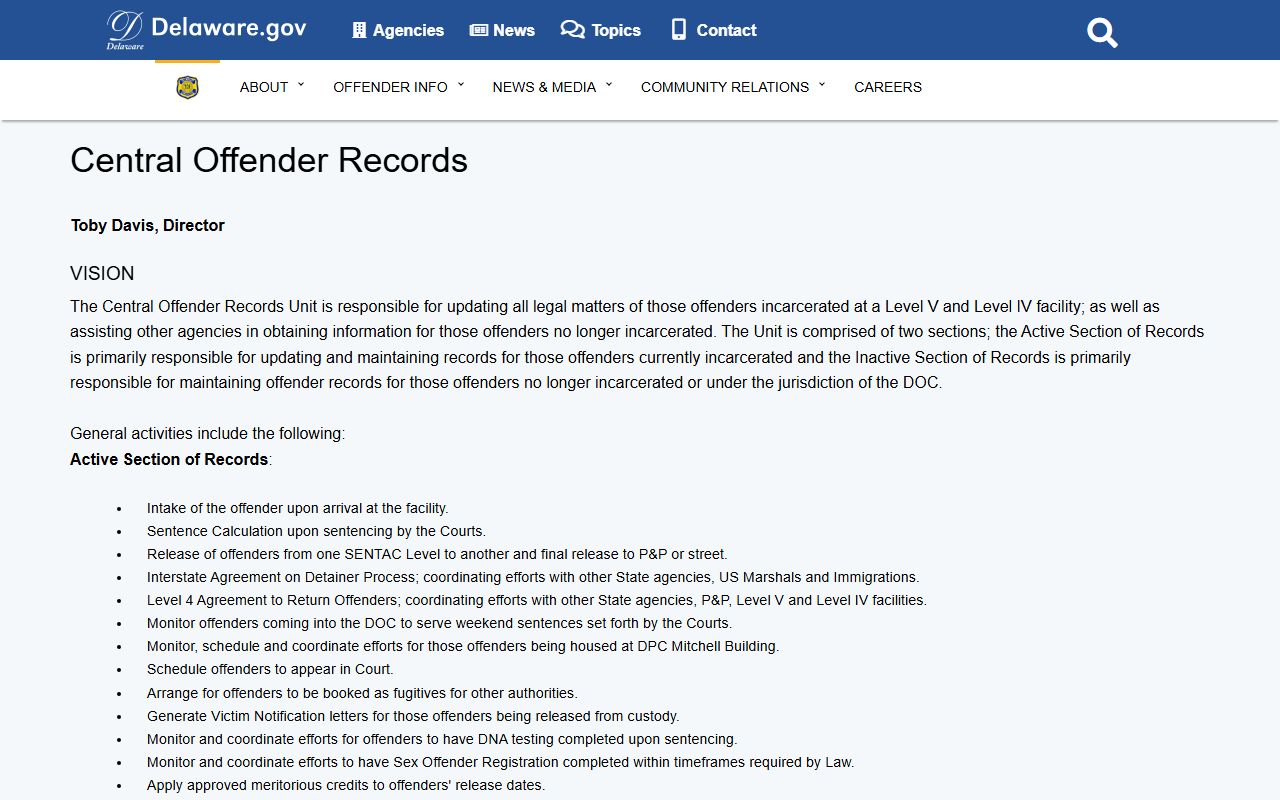
That page is a good resource when you need to know which part of the DOC keeps the record you want.
When someone is booked, the Active Section creates a new file. The file holds a mugshot, fingerprints, a health screen, and basic personal data. Any court paper that comes in later, like a sentence order or a detainer, gets added. When a person is released, the file goes to the Inactive Section.
Court Records and Booking Releases
Court records tell you the legal side of a booking and release. They show the charges, the bail order, any plea or verdict, and the sentence. Delaware courts share much of this data through one public portal called CourtConnect. You can search by party name, case number, or lawyer name. The system covers Superior Court, the Court of Common Pleas, and the Justice of the Peace Courts. Those are the courts most booked people pass through.
A court file often has the pieces of the custody puzzle that the DOC locator leaves out. Bail and bond orders say how a person can get out of jail. Sentencing orders set the length of the term and any credit for time served. Probation hearings can lead to new Delaware Booking Releases records if a judge orders a hold. All of these items sit in the court docket and tie back to the DOC file.
You can run a free search at CourtConnect to view basic case info for most Delaware courts, and the page below shows the search layout.
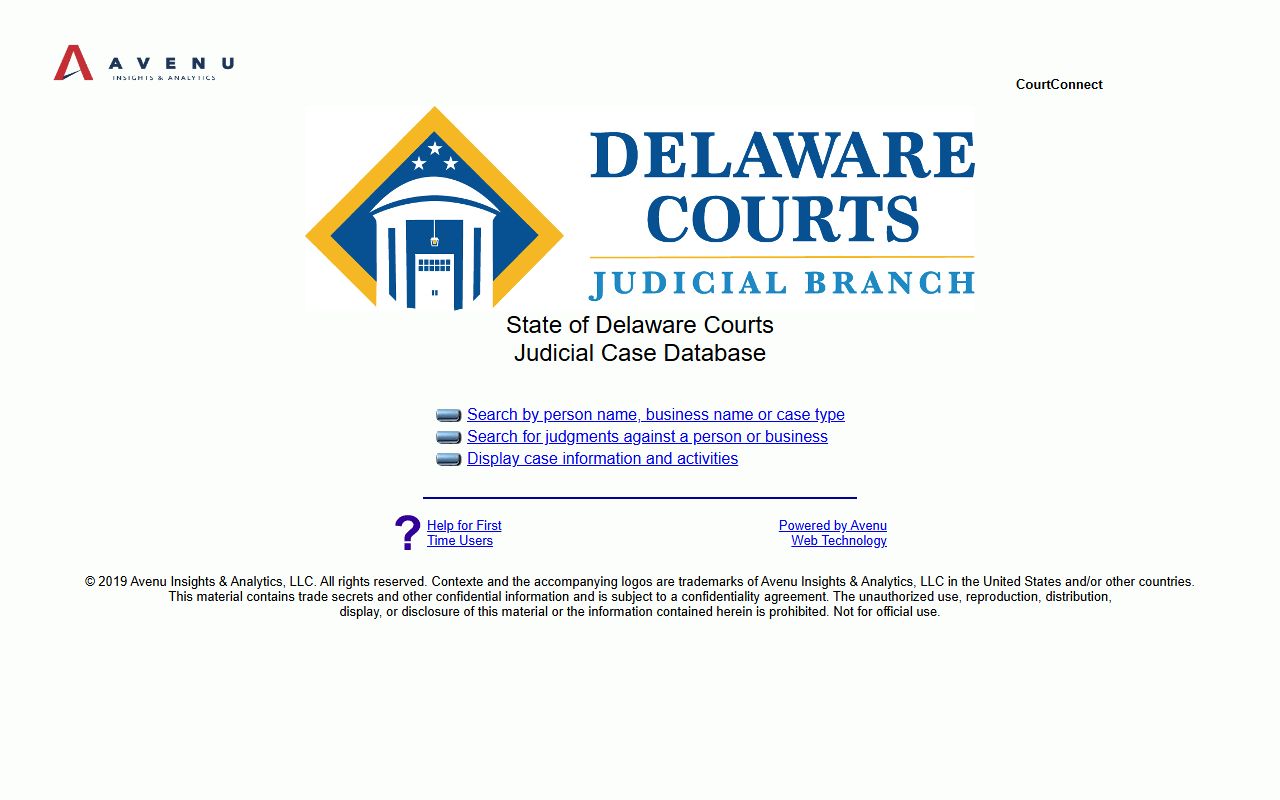
Case records link back to each booking event, so CourtConnect is a strong companion to the state inmate locator.
For more on what the courts release to the public, see the Delaware Courts record access policies page. That page walks through what you can view online, what you need to ask for in person, and what fees apply for copies.
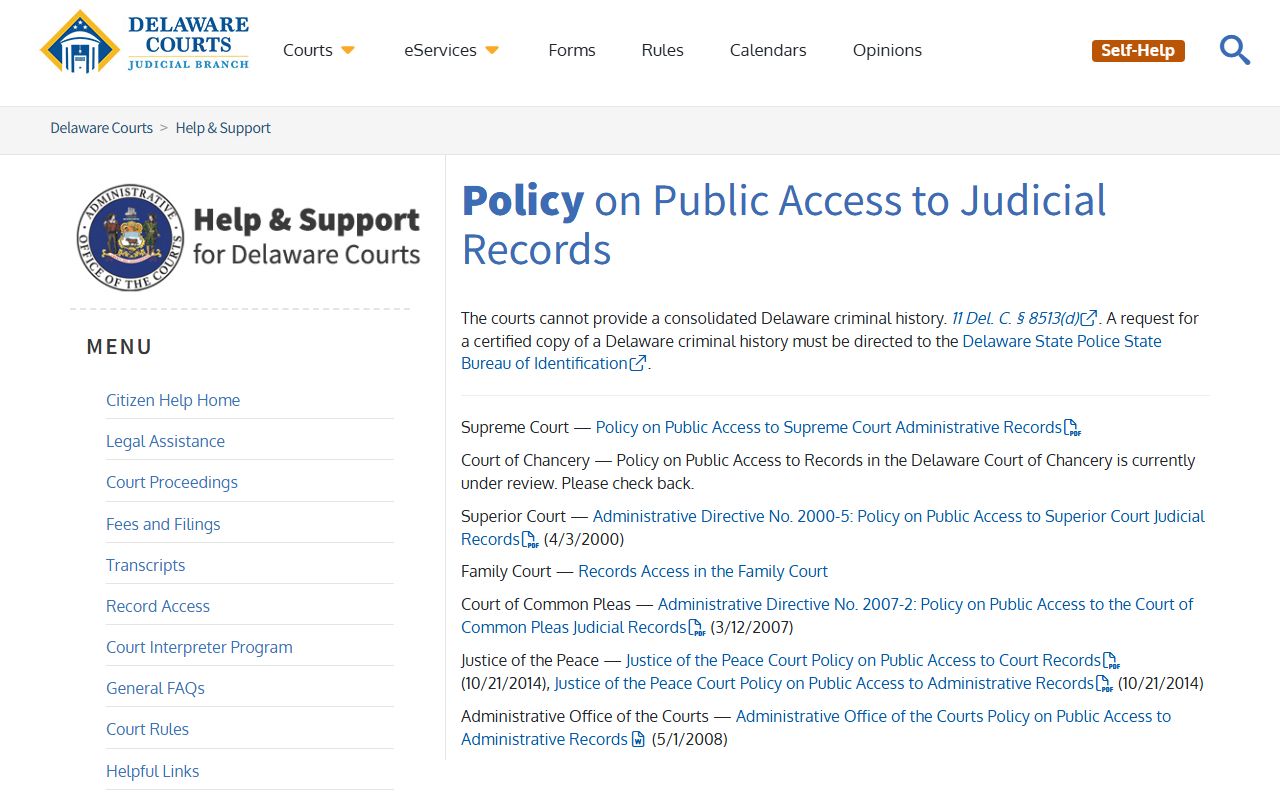
The courts also run public access terminals at each courthouse. You can use those to pull older cases that are not yet on the web portal.
Delaware State Police and Booking Releases
The Delaware State Police make many of the arrests that lead to bookings in Delaware. The State Bureau of Identification, or SBI, is the part of DSP that holds fingerprint files and criminal history records. SBI has three offices. One is in New Castle County, one is in Kent County in Dover, and one is in Sussex County. To get a criminal history check, you must go in person. You cannot do it online. A photo ID and a $52 fee are required. Debit, credit, checks, money orders, or cash work at most sites, but cash is not taken in Sussex.
The Delaware State Police website links to the SBI, troop news pages, and recent arrest archives. State troopers run primary patrol in many towns that do not have their own force. That means DSP news releases are a strong source for recent arrest data.
The DSP page is also where you can look up contact info for each troop, which helps when you want to ask about a specific arrest event.
Minors can also request a criminal history check. A parent or legal guardian must come with them. A school ID works for a juvenile. Results are not same day. They come in the mail once SBI runs the prints through state and federal systems. Private parties cannot get another person's full criminal record without that person's signed consent.
Delaware FOIA for Booking Releases
Delaware uses a public records law called FOIA. The formal name is the Freedom of Information Act. It sits in Title 29 of the Delaware Code. The law says that public business must be open. That is why arrest logs, booking photos, and release data are mostly open to the public. Each agency must name a FOIA coordinator. The coordinator takes your request, checks for exemptions, and sends back the records. An agency has 15 business days to respond.
FOIA covers the DOC, state police, local police, and every town and county office. For inmate files, your request goes to the DOC. For arrest reports, you write to the arresting agency. The Delaware FOIA portal lists the contact for each state department, and most local sites have a form you can fill out online.
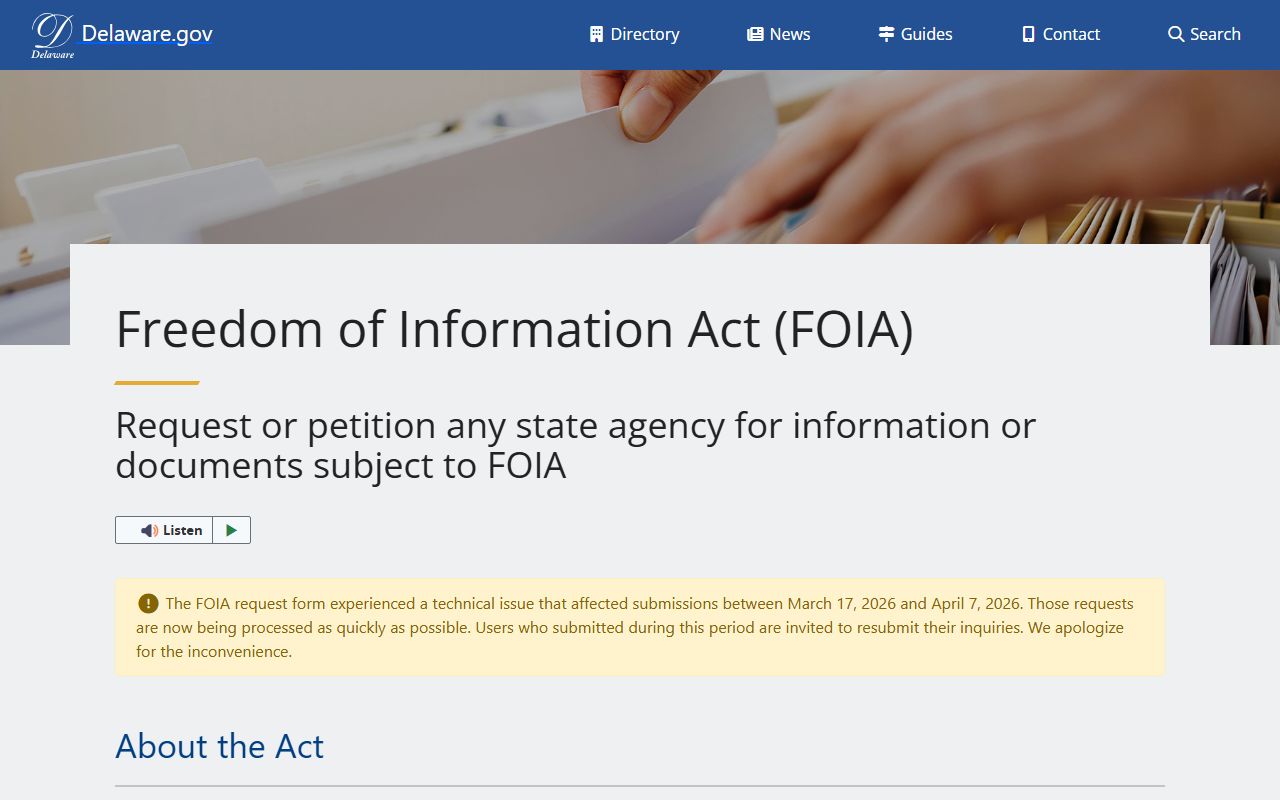
The state FOIA page is a good starting point when you are not sure which agency holds the record you want.
Some parts of a record may be held back. Records that are part of an open case can be closed until that case ends. Medical data, juvenile files, and some witness info can also be pulled out. If an agency says no, you can file a complaint with the Delaware Department of Justice. The DOJ Civil Division reviews the case and writes an opinion. You can see past opinions on the Department of Justice FOIA opinions page for examples of how past complaints were decided.
Delaware Statutes That Shape Booking Releases
Title 11 of the Delaware Code is the main source of law for crimes and criminal procedure. Chapter 65 covers the DOC. Chapter 43 covers sentencing, probation, parole, and pardons. Section 4322 of Title 11 sets strict limits on who can see presentence reports, preparole reports, and case supervision files. Those are marked privileged and cannot be shared with anyone other than the courts, the Board of Parole, the Board of Pardons, and the Attorney General's office. That rule keeps some records out of a basic FOIA response.
Section 6535 sets the rules on how the Department handles inmate discipline. Each charge, each hearing, each punishment, and each medical check must be logged. Section 6537 covers inmate visits and mail. Section 6540 sets the discharge allowance, which is clothing and transport given to a person when they leave prison. These sections tie straight to the Delaware Booking Releases cycle because they shape what is on the record and what is held back from public view.
See the full statute text at the Delaware Code Title 11 page, which is the official online version of the state code maintained by the legislature.
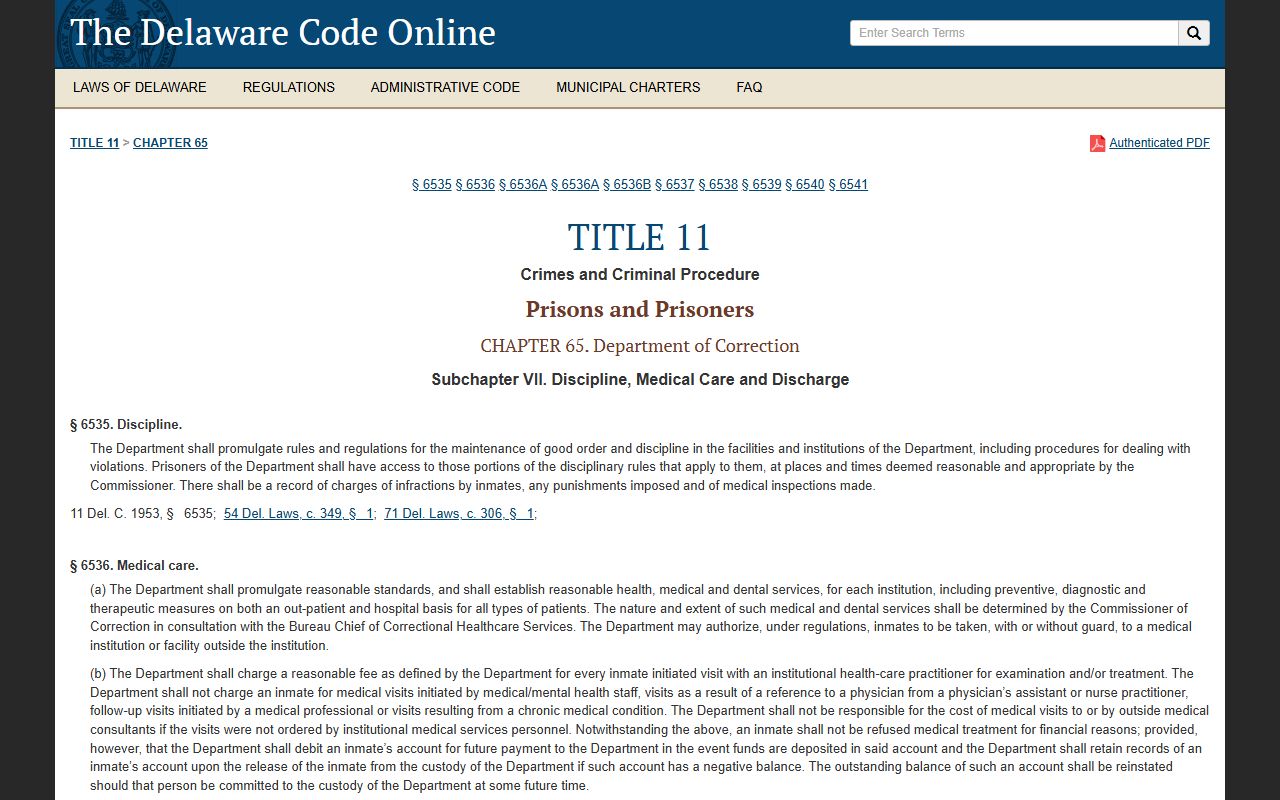
The online code is free to browse and is updated as new laws pass each session.
Delaware Booking Releases Through the Courts
The Delaware court system is the judicial side of each booking. When police arrest someone, that person sees a judge within hours. The Justice of the Peace Courts handle the first hearing. A JP can set bail, release on own recognizance, or hold the person for a higher court. This first step is the hinge point for many Delaware Booking Releases records because it sets whether the person goes home or to a DOC site.
The Delaware Courts homepage links to every court in the state. You can find the Superior Court, the Court of Common Pleas, Family Court, and Justice of the Peace Courts from one page.
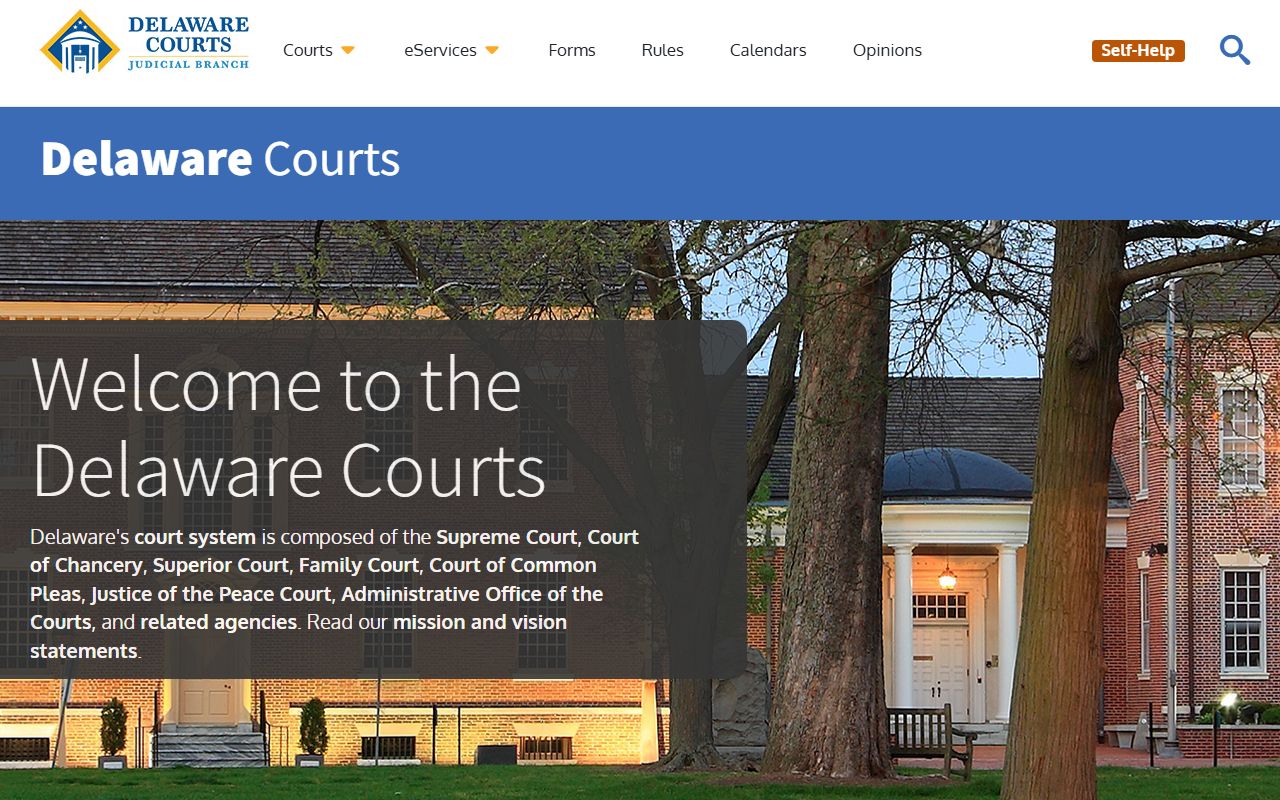
The site has forms, rules, contact info for each judge and clerk, and a direct link to CourtConnect.
Each level of court adds more paper to a case file. The first bail order, the charging document, plea papers, trial notes, and the final judgment are all on the docket. You can ask the clerk for a certified copy of any public item. Fees vary by court. Most clerks charge a per page rate plus a cert stamp fee when needed.
Sex Offender Registry and Booking Releases
The Delaware Sex Offender Registry is run by the State Police. It is public. You can search it by name, town, or offense type. The site shows the person's photo, address, and the offense that put them on the list. A risk level is also shown. Delaware uses three tiers. Tier 3 offenders must register for life. Some in lower tiers may ask the court to take them off after they meet the legal waiting period.
Each time a sex offender is booked or released, the DOC and the State Police update the registry. The registry ties back to Delaware Booking Releases because the date a person gets out must match what is on file. You can see all current listings at the Delaware Sex Offender Registry.
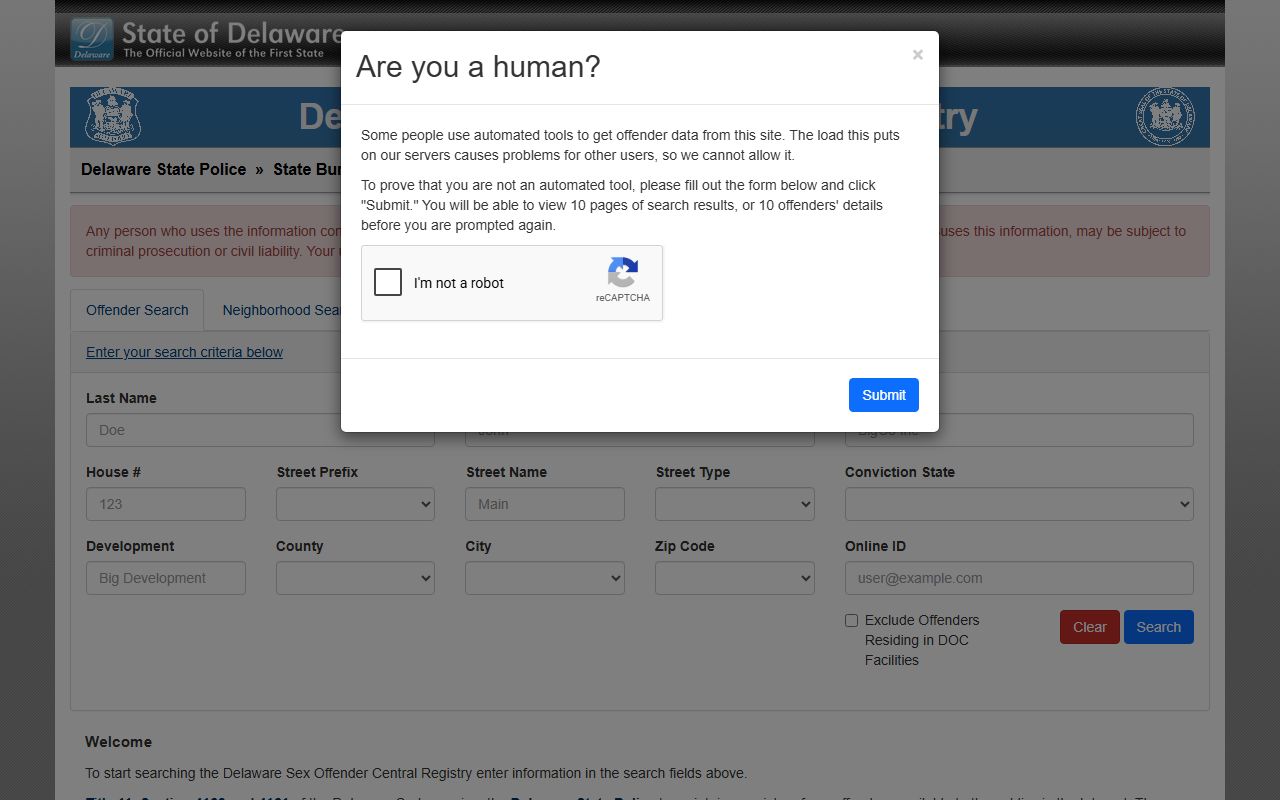
The registry is part of the national public network run by the U.S. Department of Justice.
Note: Megan's Law notices are sent when certain sex offenders are set to be released back to the community in Delaware.
Historical Delaware Booking Releases Records
Some Delaware Booking Releases date back more than a hundred years. The Delaware Public Archives keeps old prisoner registers, commit papers, and facility logs from sites that no longer exist. These records move to the Archives once they pass the DOC retention period. If the DOC no longer holds the file you want, the Archives may have it. The Archives does charge fees based on the volume of the request and the format. Some files are on paper only and must be pulled by hand.
To search an old record, you need a few details. The type of record, the county, the person's name, a date, a volume, and a page number help staff pull the file. You can get most of that from the agency that made the record, which is often the DOC or the local court. The Delaware Public Archives also offers research help for people who are new to historical searches.
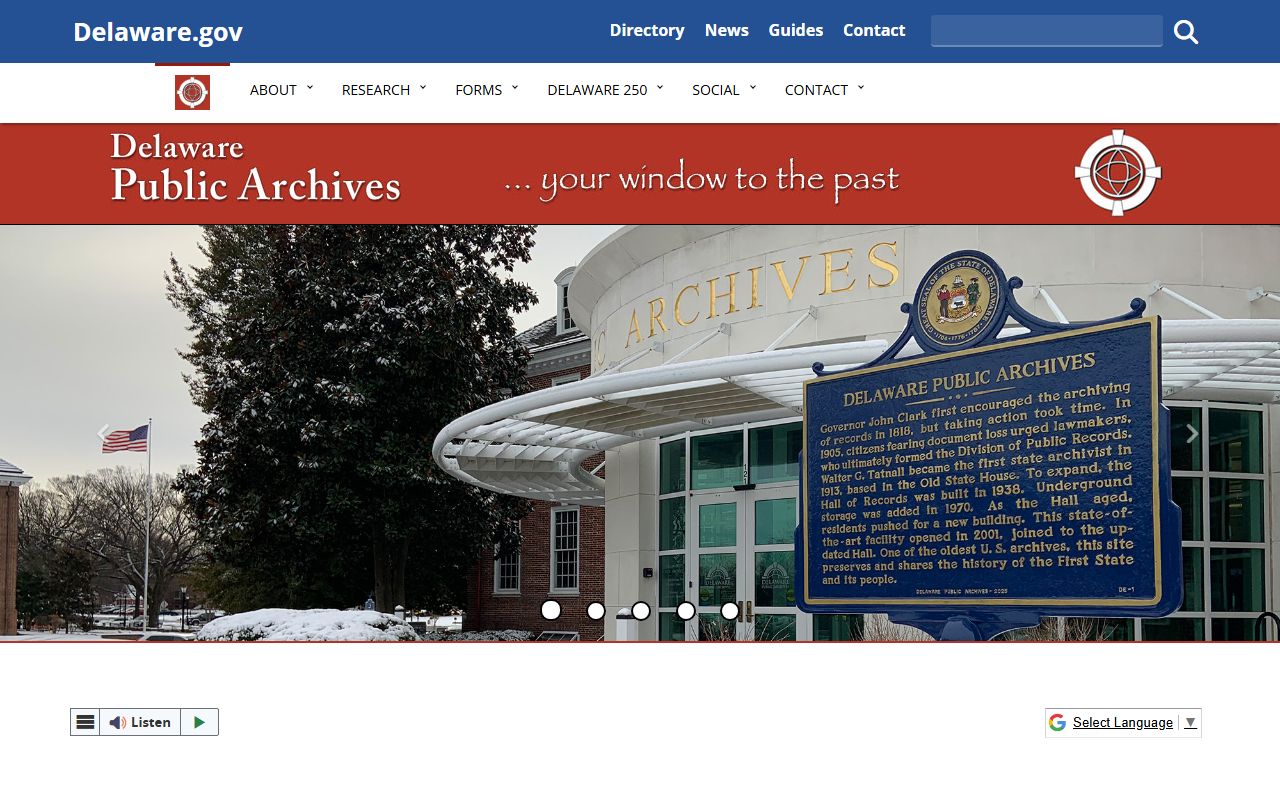
Old records can fill in gaps that modern systems cannot, so the Archives is worth a call for any case before the digital era.
Delaware Booking Releases by County
Delaware has three counties. Each county has its own police force, courts, and jail facility runs by the DOC. Pick a county below to find local Booking Releases info for that area.
Major Delaware Cities for Booking Releases
Delaware's major cities each have their own police department. Arrests in these cities feed into the state DOC system. Pick a city below to find the local info for Booking Releases in that area.